
Field Notes · Catnum 240062 · score 40 — high uncertainty
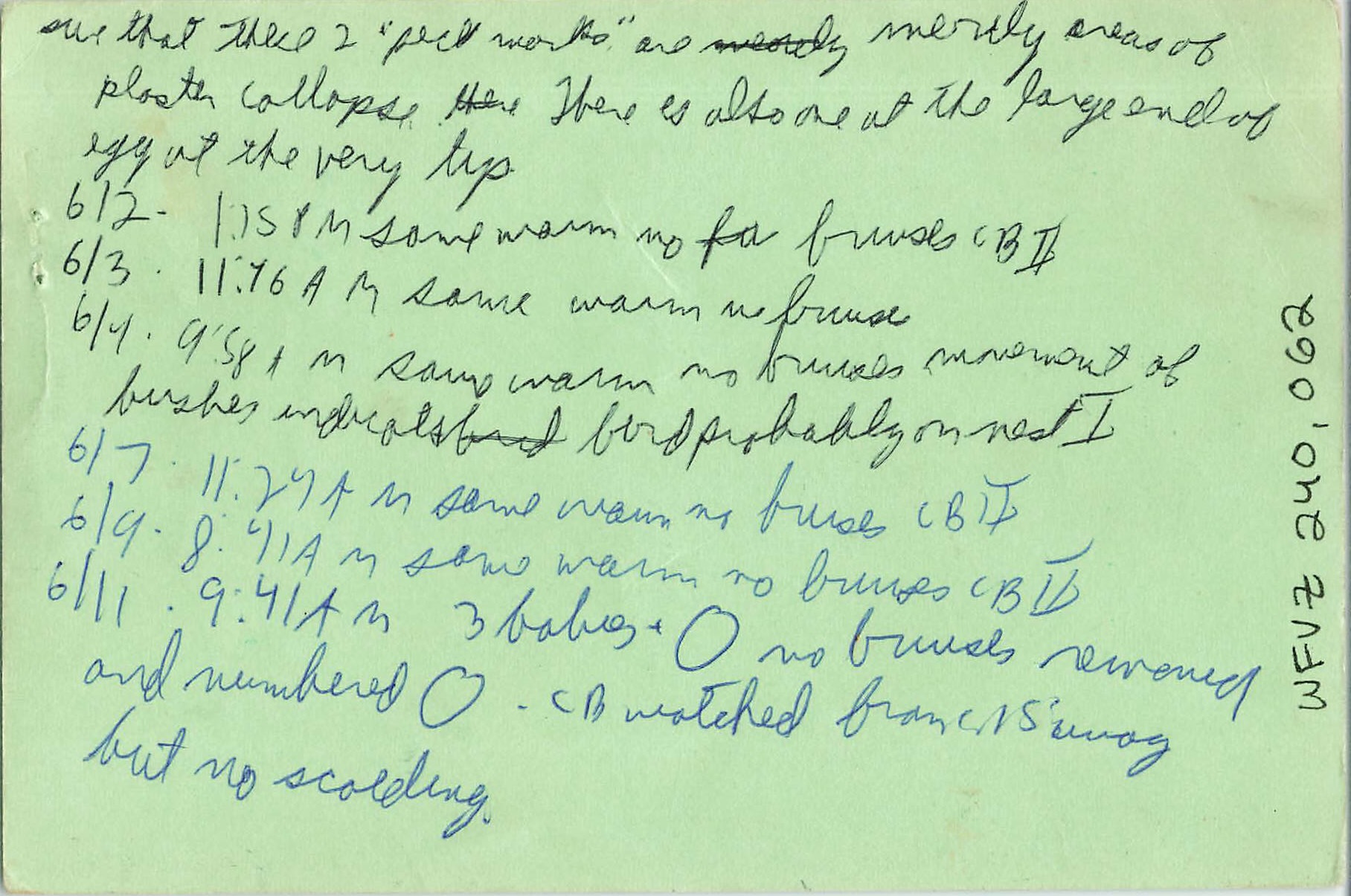
Parodies Arbos May 26-04:55pm. 3' up in low growing barberry in front 50' south most arbor. Shrub has a bird growing out and one warm egg. 4:57am 16 west 10 in honeysuckle on top of fence possible grosbeak nest. 5/27 c. 8:15am 2 is oldest. 5/29 10:01am 6 4 warm eggs catbird central CBII [22.77X1756 SIBLEY] 5/30 10:06am 3 eggs on road ahead lead bird 1 warm and dry no bruise 5/31 9:57am same warm no bruise sent 2 possible tiny pick marks along. June 1 12:24am same warm no further bruise clear out that filled 2 "pill marks" are mostly merely areas of placenta collapse. There is also one at the large end of egg at the very tip. 6/2 11:58am same warm no far bruise CBII 6/3 11:76am same warm no bruise 6/4 9:58am same warm no bruises movement of bushes in front of road probably on nest 1 6/7 11:79am same warm no bruise CBII 6/9 8:41am same warm no bruise CBII 6/11 9:41am 3 babies no bruise removed and numbered. CB watched from 15 away but no scolding.
Metadata · Catnum 240062
Date29 May 1969
LocalityNew Haven, Connecticut, USA
CollectorRothstein, Steve
Eggs in Set4
Specimen TypeE
Incubationunknown
Identificationbird seen
Nest Height0.91 m (3 feet)
Nest Supportbarberry shrub
Nest Settingarbor area with honeysuckle on fence
Nest NotesNest located in low growing barberry shrub in front of arbor, 50 feet south of most arbor. Observer tracked nest over multiple days from May 26 through June 11, monitoring egg warmth and development. Three babies eventually hatched and were removed and numbered. Adult catbird watched from 15 feet away but showed no scolding behavior.
HeaderCalbird
Further DetailsWFVZ 240,062 | 69-266
✦ Anecdote
This record is unusual for its extremely detailed daily monitoring over more than two weeks, tracking individual eggs through incubation to hatching, and the collector's meticulous notes about egg warmth and potential bruising or development marks.